
Why Energy Independence Matters in Today’s Europe
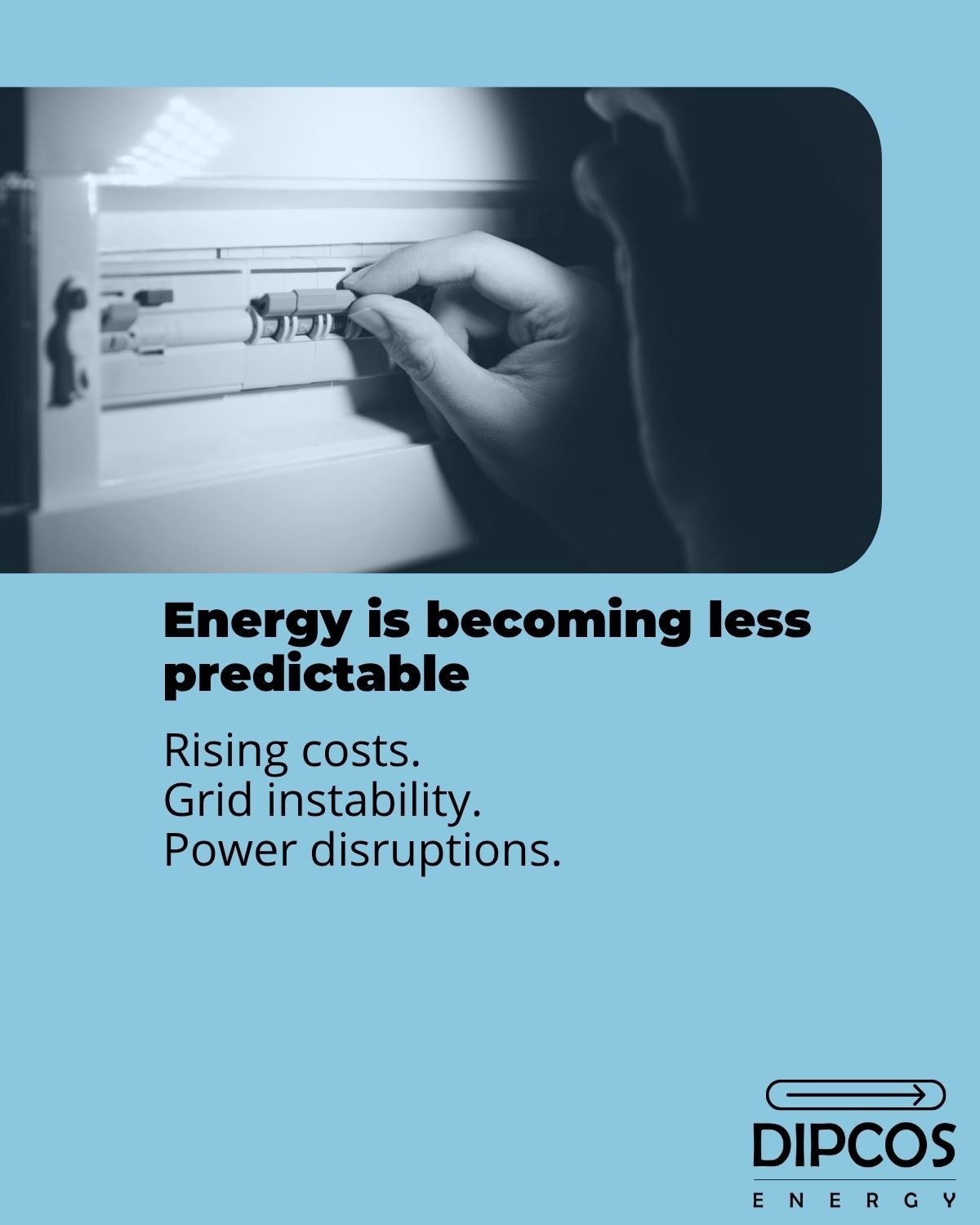
Energy systems across Europe are under increasing pressure.
Rising demand, infrastructure limitations and external dependencies are contributing to higher costs and reduced reliability. In recent years, power disruptions and instability have highlighted the vulnerability of traditional energy models.
A Changing Energy Landscape
Historically, energy systems were designed around centralized production and stable distribution.
Today, that model is being challenged.
Energy prices are increasingly volatile
Grid stability is under pressure
Demand continues to grow
External factors influence supply
This creates a new reality where dependence on a single energy source becomes a risk.
What Energy Independence Really Means
Energy independence does not necessarily mean disconnecting from the grid.
It means reducing dependency and gaining control.
This includes:
Storing energy for later use
Managing consumption more efficiently
Protecting operations during outages
Optimizing energy costs over time
The Role of Energy Storage
Energy storage is a key component in achieving this independence.
By integrating storage systems, it becomes possible to:
Use energy when it is most needed
Reduce reliance on peak grid pricing
Maintain continuity during disruptions
Increase overall system resilience
Looking Forward
As energy systems continue to evolve, the ability to control and manage energy will become increasingly important.
Energy independence is no longer a future concept —
it is becoming a practical necessity.
Dipcos Energy develops solutions designed to support this transition, combining modular design with intelligent energy management.
🔘 Reliable energy. Real independence.
